Skip to content
Kitchener Prestige Flooring

Tile & stone

Natural Stone Flooring Installation in Kitchener, Ontario

Travertine, limestone, sandstone and quartzite each bring a different character to a floor, and each needs different care. Kitchener Prestige Flooring installs natural stone for homeowners, designers and builders across Kitchener, Waterloo and Wellington County.

We have more than 16 years in flooring and 1,700+ jobs behind us. With natural stone, the details that matter most are local: which stones survive Ontario freeze-thaw and salt, and which ones belong indoors only.

Our crew is licensed, insured and WSIB covered. Every stone floor comes with a written 1-year labour warranty and a sealing plan matched to the stone you choose.

  • Licensed & insured
  • WSIB covered
  • 1-year labour warranty
  • Free in-home estimates
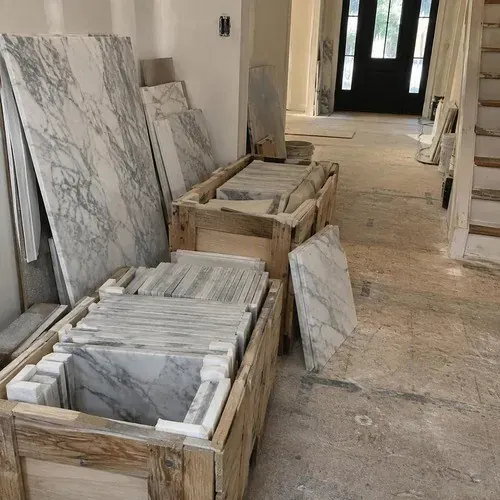
Natural stone floor tiles staged in an entryway before installation

Choosing a Natural Stone for an Ontario Home

Marble, granite and slate each have their own page. This page covers the other stones we install most often.

Travertine and Filled Versus Unfilled

Travertine is a form of limestone laid down by mineral springs, full of natural holes and a warm, earthy colour range. It comes filled, with the holes packed with resin or cement, or unfilled for a rustic texture.

Filled travertine is smoother and easier to clean. Tumbled travertine, with softened edges, is popular in sunrooms and Mediterranean-style interiors.
Limestone and Its Softness

Limestone has a quiet, even tone that suits modern and farmhouse interiors alike. It is soft, around 3 to 4 on the Mohs scale, and reacts to acids.

It works well in low-traffic rooms, bathrooms and formal spaces with a honed finish. It is not the stone for a mudroom.

Sandstone and Quartzite

Sandstone is naturally textured and slip resistant, with warm, layered colours. It is porous and needs regular sealing.

Quartzite is one of the hardest natural stones, harder than granite. True quartzite does not etch, which makes it a great choice for kitchens where people want a marble look without the maintenance.

Porosity, Absorption and Freeze-Thaw

Stone absorbs water through tiny pores. In Waterloo Region, that matters at every exterior door.

Meltwater and road salt soak into porous stone, and in unheated vestibules and porches the water freezes and expands. Over a few winters, that cycle can pop the surface away, a failure called spalling.

We check absorption ratings before recommending stone for an entry. Low-absorption stones like quartzite, granite and dense slate belong there. Porous limestone, sandstone and unfilled travertine belong indoors, away from the door.

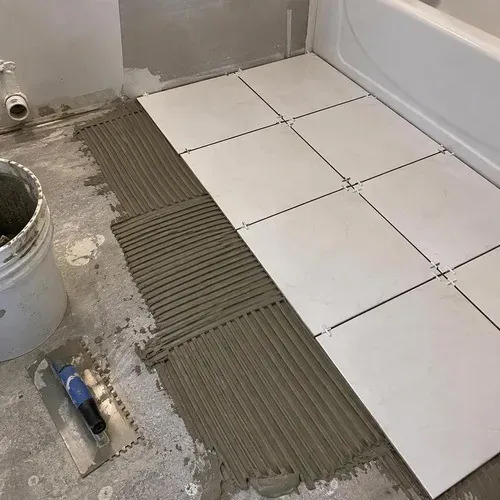
Large-and-heavy-tile mortar combed out before natural stone tiles are set

Sealing Regimes by Stone Type

Different stones need different sealers and intervals. This is the schedule we give our customers.

Stone Sealer type Typical reseal interval
Travertine Penetrating, stone-specific 1 to 2 years
Limestone Penetrating, stain resistant Every year
Sandstone Penetrating, high solids Every year
Quartzite Penetrating 2 to 3 years
Slate Impregnating or colour enhancing 2 to 3 years
Granite Penetrating, only if absorbent 3 to 5 years

Our floor sealing and waterproofing team can take care of resealing on a schedule.

Setting Materials and Substrate for Heavy Stone

Natural stone needs a stiff floor, meeting a deflection limit of L/720. Many older homes need joist reinforcement or a second layer of plywood first.

We set stone in a large-and-heavy-tile mortar with back-buttering for full coverage. Light stones are set in white mortar so grey does not shadow through.

On concrete, we use a crack isolation or uncoupling membrane so slab movement does not crack the stone.

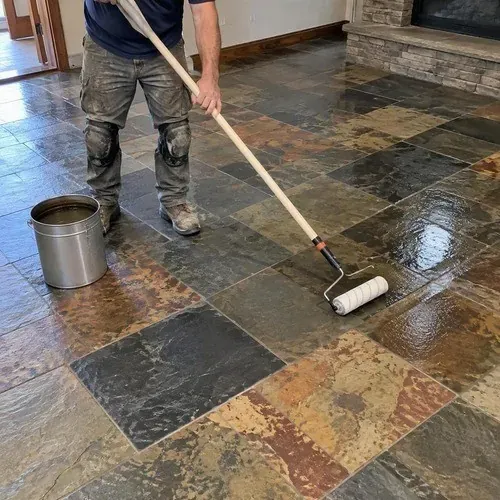
Penetrating sealer applied to a natural stone floor with a pole roller

Pattern Layouts, Versailles and Random Ashlar

Natural stone suits patterns that would look busy in porcelain.

Versailles, or French pattern, combines four tile sizes in a repeating block. It is classic in travertine and suits large rooms.

Random ashlar mixes rectangular sizes in a less formal, stone-wall look. Both patterns need a careful dry layout so the repeat does not show.

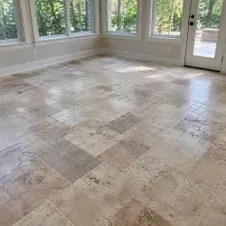
Tumbled travertine floor in a sunroom with natural colour variation
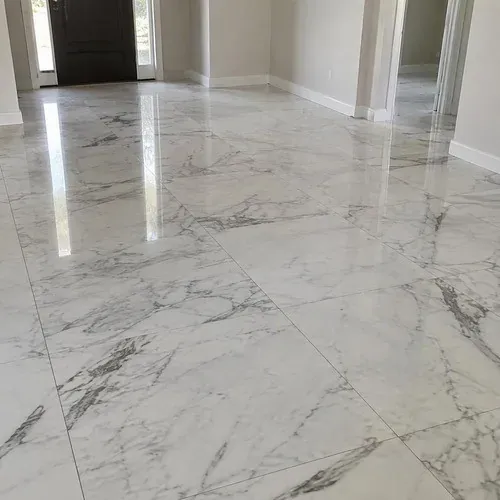
Polished marble foyer showing a formal stone layout
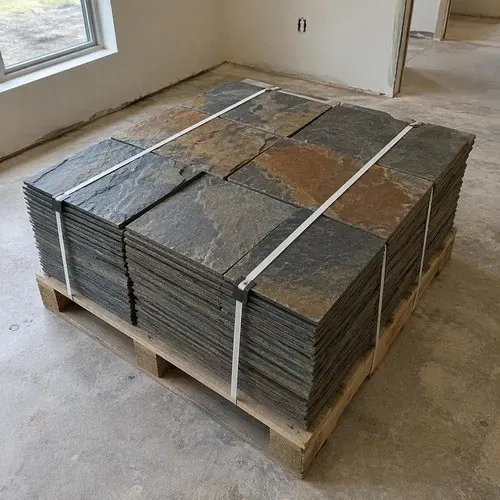
Cleft slate tiles in rust and charcoal ready for a random layout

Honed, Brushed and Tumbled Surfaces

Honed stone has a smooth, matte finish with good grip. It is the most practical choice for kitchens and bathrooms.

Brushed stone is treated with abrasive brushes that soften the surface and open the texture slightly. It hides wear well.

Tumbled stone is aged in a drum with rounded edges and an antique look. It is forgiving of dirt and scuffs.

Natural Stone Pricing and Lifespan

Typical 2026 ranges in Waterloo Region:

Item Typical cost per sq ft
Natural stone installation labour $10.00 to $18.00
Pattern layouts such as Versailles add $2.00 to $5.00
Travertine or limestone material $5.00 to $15.00
Quartzite material $10.00 to $25.00

Well-installed and maintained stone floors last 50 years or longer. For other options, compare marble, slate and granite. All stone work carries our 1-year labour warranty.

FAQ

Natural Stone Questions

Straight answers to the questions we hear most. Still unsure? Call and ask.

Ask for a Free Quote

Which natural stone handles an Ontario entryway best?

Quartzite and dense, low-absorption stones handle salt and meltwater best. Slate is also excellent. We avoid soft limestone and unfilled travertine at busy exterior doors, where water and salt collect in the pores.

Does travertine need to be filled?

Not always. Filled travertine has its natural holes packed with resin or cement, which makes it smoother and easier to clean. Unfilled travertine has a rustic look but collects dirt and water, so we recommend filled for kitchens and entries.

How often should natural stone be resealed?

It depends on the stone. Limestone and sandstone usually need resealing every year, travertine every one to two years, and quartzite every two to three. A water drop test tells you when it is time.

Is limestone too soft for a kitchen floor?

Limestone is soft and reacts to acids like marble does. It can work in a kitchen with a honed finish, good sealing and fast cleanup of spills. Busy family kitchens are usually happier with quartzite or porcelain.

Free estimate

Book a Free Natural Stone Flooring Installation Estimate

Tell us about the floor. We will call to book a time, measure on site, check the subfloor and moisture, and leave you a written quote.

Prefer to talk it through first? Call and speak to a flooring specialist directly.

  • Measured on site, with moisture and flatness readings
  • Written, itemized quote with no obligation
  • Licensed, insured, WSIB covered, 1-year labour warranty

Kitchener Prestige Flooring

137 Glasgow St, Kitchener, ON N2M 5E3

info@kitchenerflooring.ca

Monday to Saturday: 7:00am to 9:30pm

Sunday: 9:00am to 9:00pm

Call (548) 490-1518 Quote