Skip to content
Kitchener Prestige Flooring

Resilient flooring

Rubber Flooring Installation in Kitchener, Ontario

Rubber floors absorb impact, deaden noise and stay grippy under sweat and spills. Kitchener Prestige Flooring installs rolled rubber, interlocking tiles and poured rubber surfaces for home gyms, fitness studios, workshops, clinics and daycares across Kitchener and Waterloo Region.

We bring more than 16 years of flooring experience and 1,700+ jobs to each installation. That includes the unglamorous details, like airing out recycled rubber before it goes down and testing slabs so moisture does not get trapped.

Our crew is licensed, insured and WSIB covered, which matters when you are fitting out a commercial gym. Every rubber floor carries a written 1-year labour warranty.
  • Licensed & insured
  • WSIB covered
  • 1-year labour warranty
  • Free in-home estimates
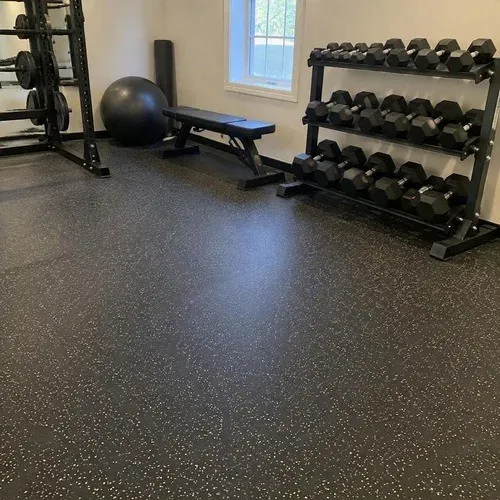
Black speckled rubber flooring installed in a weight room

Where Rubber Flooring Earns Its Place

Rubber does three jobs better than any other floor. It absorbs impact, it quiets noise and it keeps its grip when wet.

That makes it the right choice for home gyms, commercial fitness studios, physiotherapy clinics, daycare play areas and workshop standing zones. It also protects the slab underneath from dropped weights and tools.

It is not a decorative living room floor. We will tell you honestly where rubber fits and where a vinyl or epoxy system is the better answer.

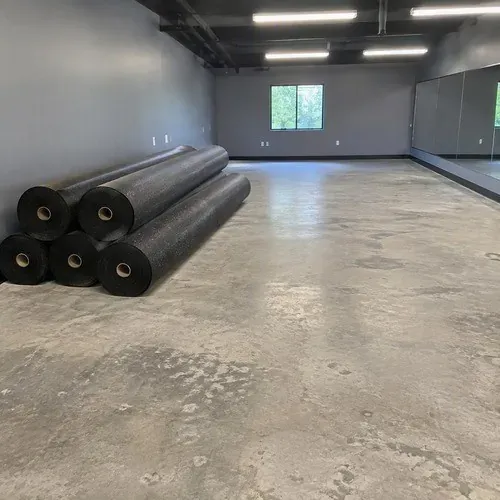
Rolls of black rubber flooring staged on bare gym concrete

Rubber Formats We Install

Rubber flooring comes in three main forms. The right one depends on the size of the space and how permanent it needs to be.

Rolled Rubber for Large Open Areas

Rolls are usually 4 feet wide and up to 50 feet long. They cover large gyms quickly with few seams.

Rolls are heavy, so installation needs planning. We unroll, relax and cut them in place, then glue or tape the seams.

Interlocking Tiles for Phased or Movable Layouts

Tiles, typically 2 by 2 feet, lock together with puzzle edges or hidden pins. They suit home gyms, rental units and businesses that may move.

Individual tiles can be lifted and replaced if one gets damaged. They also let you build a floor in stages.

Poured-in-Place Rubber Surfaces

Poured rubber mixes rubber granules with a polyurethane binder, trowelled on site into a seamless surface. It is used for playgrounds, running lanes and some sports surfaces.

It takes longer to cure and costs more, but there are no seams to lift. For courts and tracks, see our sports flooring installation service.

Thickness Selection by Use

Thickness should match the heaviest thing that will hit the floor.

Use Recommended thickness
General traffic, clinics, daycares 6 to 8 mm
Cardio machines and stretching areas 8 mm
Dumbbells and functional training 10 to 12 mm
Barbell and Olympic lifting zones 20 mm or platforms

Thicker is not always better. Very thick rubber can feel spongy for cardio and costs more to move and install.

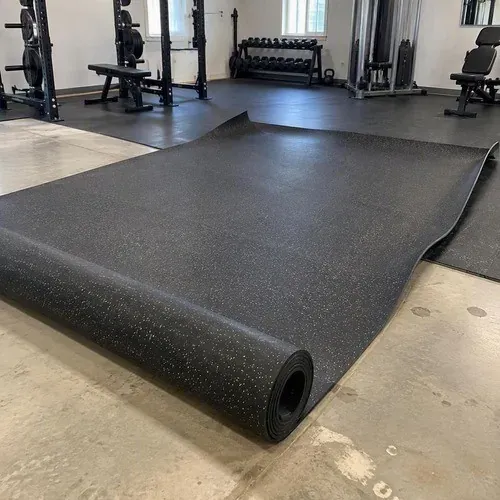
Rubber flooring roll unrolled and relaxing flat before installation

Recycled Versus Virgin Rubber and the Odour Question

Most affordable gym flooring is made from recycled tire rubber, called SBR. It is durable and sustainable, but it has a strong rubber smell when new.

Suppliers rarely mention this. In a basement gym with little airflow, the odour can linger for weeks.

We unroll recycled rubber in a ventilated space for two to three days before installing it. If smell is a concern, EPDM or virgin rubber costs more but smells far less, and it comes in brighter colours.

Adhesives, Double-Sided Tape and Loose Lay

Full glue-down uses a one-part or two-part urethane adhesive. It is the standard for commercial gyms and anywhere with rolling equipment.

Double-sided tape along seams and edges keeps rolls flat without a permanent bond. It suits rentals and spaces that may change use.

Loose lay works for heavy rolls and interlocking tiles in home gyms. We still recommend taping seams on thinner rolls to stop curling.

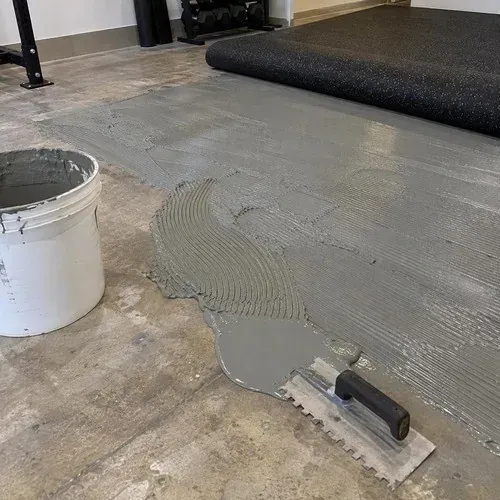
Urethane adhesive troweled on concrete before a rubber floor sheet is laid

Subfloor Requirements Under Rubber

Rubber is heavy but it still follows the surface beneath it. The substrate needs to be clean, sound and reasonably flat, within about 3/16 inch over 10 feet.

On concrete, we test moisture first. Rubber traps vapour, and a wet slab under a glued rubber floor can break the bond or grow mould.

Rubber can also stain vinyl and some coatings through a chemical reaction. We never lay it directly on those surfaces without a barrier.

Cleaning and Maintaining Rubber Floors

Dust mop or vacuum regularly to lift grit that grinds into the surface. Damp mop with a pH-neutral cleaner made for rubber.

Avoid oil-based cleaners, solvents and harsh degreasers. They soften and discolour rubber over time.

For commercial gyms we can set up a maintenance schedule with an auto-scrubber and the right chemicals. Ask about it during your gym and fitness flooring estimate.

Rubber Flooring Pricing

Typical 2026 ranges in Waterloo Region:

Item Typical cost per sq ft
Rolled rubber material, 8 to 10 mm $2.50 to $5.00
Interlocking rubber tiles $4.00 to $9.00
Installation labour, glue-down $1.50 to $3.50
Poured-in-place rubber, installed $12.00 to $22.00

Commercial and industrial spaces may also need slab prep or coatings. Our industrial flooring and commercial flooring teams handle the full scope. All rubber installs include our 1-year labour warranty.

FAQ

Rubber Flooring Questions

Straight answers to the questions we hear most. Still unsure? Call and ask.

Ask for a Free Quote

How thick should rubber flooring be for free weights?

For dumbbells and general strength work, 3/8 inch (about 10 mm) is the minimum we recommend. For barbell drops and heavy deadlifts, go to 3/4 inch (about 20 mm) or add dedicated lifting platforms on top.

Does recycled rubber flooring smell?

Yes, at first. Recycled tire rubber gives off a noticeable odour for several weeks.

Unrolling it in a ventilated space for two to three days before installation cuts that down a lot. Virgin or EPDM-rich rubber smells much less.

Can rubber flooring go over concrete without glue?

Heavy rolls and interlocking tiles can be loose laid in many home gyms, especially 3/8 inch and thicker. Seams can shift over time, so we often tape the seams or fully glue floors in commercial gyms.

Will rubber flooring damage the subfloor underneath?

Rubber can trap moisture against a slab and can stain vinyl or epoxy coatings it sits on. We test the slab and never lay rubber directly on a finished vinyl or coated floor without a separation layer.

Free estimate

Book a Free Rubber Flooring Installation Estimate

Tell us about the floor. We will call to book a time, measure on site, check the subfloor and moisture, and leave you a written quote.

Prefer to talk it through first? Call and speak to a flooring specialist directly.

  • Measured on site, with moisture and flatness readings
  • Written, itemized quote with no obligation
  • Licensed, insured, WSIB covered, 1-year labour warranty

Kitchener Prestige Flooring

137 Glasgow St, Kitchener, ON N2M 5E3

info@kitchenerflooring.ca

Monday to Saturday: 7:00am to 9:30pm

Sunday: 9:00am to 9:00pm

Call (548) 490-1518 Quote