Commercial Weight Rooms
Commercial gyms need floors that take dropped dumbbells, heavy racks and hundreds of users a day. We install rolled rubber and tiles with zones sized for each area.
Commercial & specialty
The right gym floor protects your equipment, your slab and the people downstairs. Kitchener Prestige Flooring installs gym and fitness flooring for commercial gyms, physio clinics, condo fitness rooms and home gyms across Kitchener and Waterloo Region.
We bring more than 16 years of flooring experience and 1,700+ completed jobs to each project. We specify rubber thickness, turf and platforms by what you actually lift, not by what is on sale.
Our crew is licensed, insured and WSIB covered. Every gym floor is backed by a written 1-year labour warranty and a free on-site estimate.
Courts and gymnasiums live on our sports flooring installation page. This page covers weight rooms, studios and home gyms.
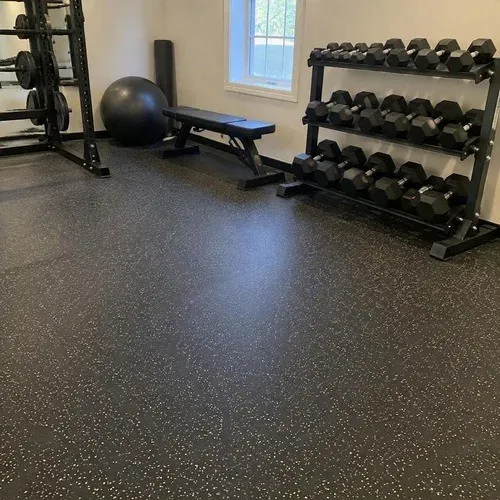
Commercial gyms need floors that take dropped dumbbells, heavy racks and hundreds of users a day. We install rolled rubber and tiles with zones sized for each area.
Sled pushes, agility work and conditioning need a turf lane or a firm rubber surface. We combine turf and rubber so each zone has the right grip.
Home gyms are one of our fastest growing requests, from basement weight rooms to full garage conversions. We treat them with the same care as commercial spaces, scaled to your budget.
Free weights, machines and cardio need genuinely different floors. These are the thicknesses we recommend.
| Training area | Recommended rubber thickness |
|---|---|
| Cardio machines and stretching | 6 to 8 mm |
| Selectorized machines | 8 to 10 mm |
| Dumbbells and general strength | 10 to 12 mm |
| Barbell work and deadlifts | 20 mm, or platforms |
| Olympic lifting with bumper drops | Platforms of 30 mm or more |
Density matters as much as thickness. Dense, high-quality rubber resists dents and tearing better than soft, cheap rubber of the same thickness.
Most gyms mix several surfaces. Here is how we combine them.
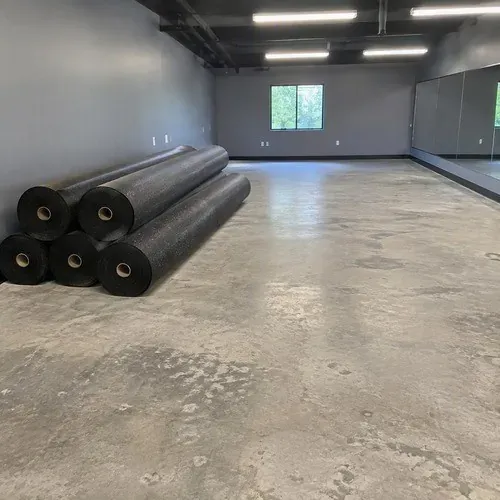
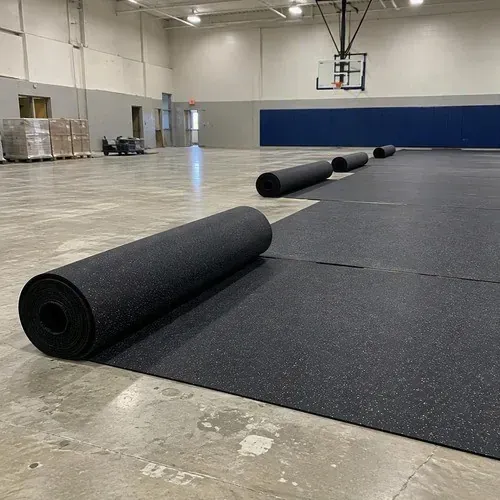
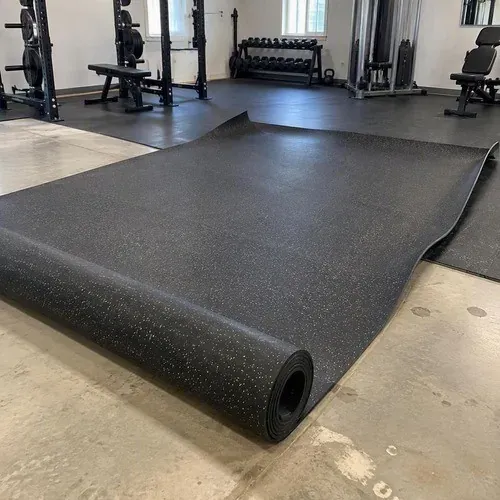
Rolls cover large areas with fewer seams and are usually glued in commercial gyms. Tiles lock together without glue and suit home gyms and phased installs.
For more detail on rubber types, see our rubber flooring installation page.
Turf lanes for sled pushes and sprints are laid over a foam or rubber pad. We set them flush with surrounding rubber so there is no trip edge.
Platforms stack layers of plywood and thick rubber to absorb bar drops. A wood centre gives a stable lifting surface, and rubber sides take the plates.
We build them on site or install commercial platforms, fitted flush into the surrounding floor.
In condos, upper-floor studios and multi-tenant buildings, noise is often the biggest issue. Dropped weights send impact noise straight through the structure.
Thicker rubber alone helps less than people expect. Real reduction comes from layered systems with acoustic underlays, isolation pads or floating platforms.
We design the build-up for your space and your neighbours. More options are on our soundproof flooring page.
Racks, heavy machines and dropped weights concentrate load on small areas. Rubber spreads that load across the slab or subfloor.
On wood-framed floors, we check the structure before recommending a heavy setup. Plywood layers under racks and platforms spread the load further.
In garages, we clean salt and oil off the slab first so they do not stay trapped under the rubber.
Recycled rubber has a strong smell when new. In a closed basement it can linger for weeks.
We unroll and air out rubber before installation. After installation, fans and open windows help, and the smell fades with time.
For homes and condos where smell matters most, we can recommend lower-odour rubber blends.
Vacuum or dust mop daily in commercial gyms to lift grit. Damp mop with a pH-neutral cleaner made for rubber.
Avoid bleach, ammonia, oil-based cleaners and solvents, which dry out and discolour rubber. Wipe sweat and chalk regularly.
For studio spaces with sprung or vinyl floors, see our dance studio flooring page.
Typical 2026 ranges in Waterloo Region:
| Item | Typical cost |
|---|---|
| Home gym rubber tiles or rolls, installed | $3.00 to $7.00 per sq ft |
| Commercial glued rubber flooring, installed | $6.00 to $12.00 per sq ft |
| Turf lane with pad, installed | $6.00 to $12.00 per sq ft |
| Acoustic underlay systems | $4.00 to $10.00 per sq ft extra |
| Olympic lifting platform, built on site | $600 to $1,500 each |
Every gym floor includes our 1-year labour warranty.
Keep exploring
Where this service is in highest demand:
FAQ
Straight answers to the questions we hear most. Still unsure? Call and ask.
Ask for a Free QuoteFor regular deadlifts and barbell drops, use at least 3/4 inch (about 20 mm) rubber, or better, a dedicated lifting platform. Thin 8 mm rubber will not protect the slab or cut the noise from repeated drops.
Yes. 3/8 to 3/4 inch rubber spreads the load from racks and dropped weights. Road salt and meltwater on the slab can get trapped under rubber, so we clean and sometimes seal the slab first.
Impact noise needs mass and isolation, not just thicker rubber. Layered systems with acoustic underlay, or isolated platforms, cut the thud that travels through the structure. We design the build-up for your space.
Recycled rubber smells when new, especially in closed basements. We air it out before installation, and ventilation fades the odour over a few weeks. Low-odour rubber options cost more but suit homes and condos.
Free estimate
Tell us about the floor. We will call to book a time, measure on site, check the subfloor and moisture, and leave you a written quote.
Prefer to talk it through first? Call and speak to a flooring specialist directly.
Kitchener Prestige Flooring
137 Glasgow St, Kitchener, ON N2M 5E3
Monday to Saturday: 7:00am to 9:30pm
Sunday: 9:00am to 9:00pm