Lifting and Loose Blocks
Blocks lose their bond and rock, click or lift when walked on. It often starts near exterior doors or over a slab with moisture.
Wood flooring
Parquet floors can look beyond saving and still come back beautifully. Kitchener Prestige Flooring restores herringbone, basketweave and mosaic parquet for homeowners, condo owners and heritage property owners across Kitchener and Waterloo Region.
In more than 16 years and 1,700+ flooring jobs, we have restored parquet in 1950s bungalows, 1970s apartments and century homes. It is specialist work that ordinary refinishing crews often damage.
We are licensed, insured and WSIB covered. Every parquet restoration carries a written 1-year labour warranty and starts with a free in-home assessment.
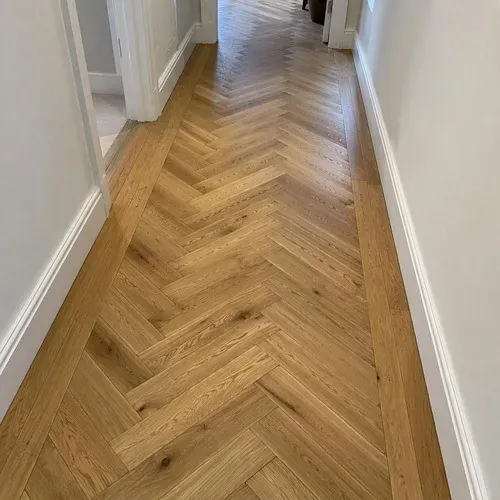
A strip floor has grain running one way. Parquet has grain running in two or more directions, block to block.
A drum sander run along the room cuts with the grain on some blocks and straight across it on others. The result is deep scratches, torn fibres and a floor that looks worse than before.
Parquet also sits on thinner blocks, often glued rather than nailed. It needs a lighter hand, different equipment and more time.
These are the issues we see most often in Waterloo Region parquet floors.
Blocks lose their bond and rock, click or lift when walked on. It often starts near exterior doors or over a slab with moisture.
Parquet laid from the 1940s to the 1970s was often set in black bitumen adhesive. After decades, the bitumen dries out and goes brittle, and blocks let go in patches.
Some adhesives of that era contain asbestos. Under Ontario Regulation 278/05, suspect materials must be tested before they are disturbed, and we arrange that testing before any removal.
Blocks shrink in dry winter air, and gaps open along the joints. Previous repairs may have left blocks missing or replaced with the wrong wood.
Parquet sanded along one direction, or sanded too hard, shows cross-grain scratches and dished blocks where soft wood was removed faster than hard wood. Careful re-sanding usually fixes it.
Matching starts with identifying the species. Most local parquet is oak, but teak, walnut and maple appear in mid-century homes.
We look for blocks in reclaimed stock, borrow blocks from inside closets, or cut new ones from matching timber to the right size and thickness.
New wood is lighter than 60-year-old wood. We tone replacement blocks during finishing so they settle in with their neighbours.
Loose blocks are lifted, numbered and cleaned. Old adhesive is scraped from the substrate, and any moisture issue is tested and addressed first.
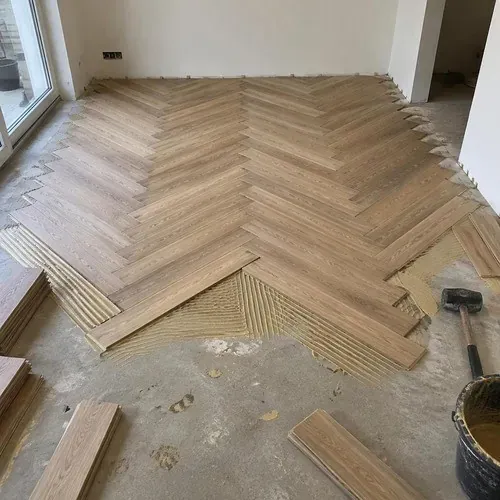
Blocks go back with a modern adhesive suited to the substrate and any remaining residue. We weight them down while the adhesive cures.
Where large areas have failed, we may lift and re-lay whole sections in the original pattern.
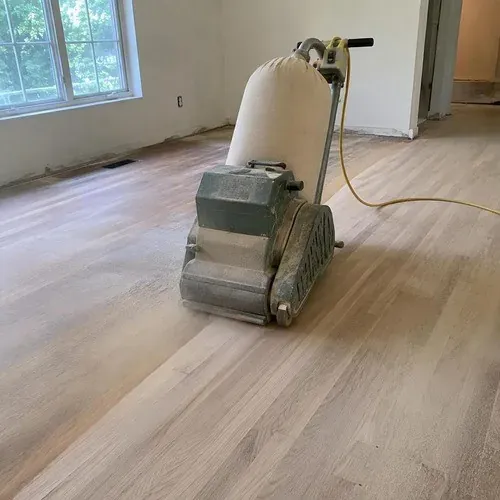
We sand parquet on the diagonal, first in one direction and then the other, with a drum or belt sander at controlled pressure. That keeps every block at a consistent angle to the machine.
The floor is then finished with a multi-disc or planetary sander, which removes the cross-grain scratches that any directional sanding leaves.
We step through the grits carefully and never skip one. Our general floor sanding and refinishing page explains the grit sequence in more detail.
We collect fine sanding dust from your own floor and mix it with a clear resin filler. Because it is made of your wood, the fill matches the colour of the blocks.
The filler is troweled into every joint and sanded flush on the final passes. Wide gaps may get thin slivers of matching wood glued in instead.
Water-based finishes keep light woods pale and modern.
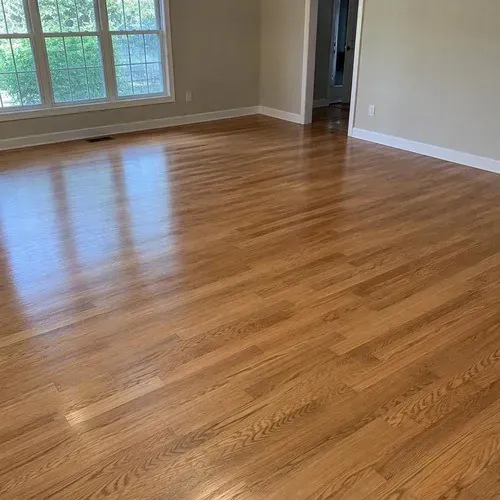
Oil-modified polyurethane gives the warm amber glow of classic mid-century floors, and it is often the right look for original teak or oak parquet.
Hardwax oils give a natural matte look and allow spot repairs. Teak is naturally oily, so it needs a compatible sealer before finish coats.
Herringbone parquet is the most common pattern in older homes. Replacing or extending it follows the same layout principles as our herringbone floor installation service.
Basketweave alternates groups of blocks at right angles in a woven pattern. Mosaic or finger-block parquet, common in 1960s and 1970s homes and apartments, uses small slats glued in squares.
Mosaic parquet is thin, so we sand it very carefully. For new patterns, borders or inlays, see our custom floor design and inlay work.
Typical 2026 ranges in Kitchener and Waterloo:
| Service | Typical cost |
|---|---|
| Parquet sand and refinish, diagonal method | $4.50 to $7.00 per sq ft |
| Re-bond loose blocks | $150 to $400 per area |
| Gap filling with resin and wood dust | $1.00 to $2.00 per sq ft |
| Matching and fitting missing blocks | quoted per block |
| Asbestos testing of old adhesive | quoted by the testing lab |
Damaged subfloors and other repairs are covered on our floor repair page. Every restoration includes our 1-year labour warranty.
Keep exploring
Where this service is in highest demand:
FAQ
Straight answers to the questions we hear most. Still unsure? Call and ask.
Ask for a Free QuoteYes. We lift the loose blocks, clean off the failed adhesive, and re-bond them with a modern adhesive suited to the substrate. Blocks are numbered so they go back in exactly the same place.
No. Parquet grain runs in several directions, so sanding along one direction tears across the grain on half the blocks. We sand on the diagonal in two directions, then finish with a multi-disc sander to remove cross-grain scratches.
We source matching blocks from reclaimed stock, borrow them from hidden areas like closets, or cut new ones from matching species. New blocks are toned during finishing so they blend in.
Black bitumen adhesive was common in mid-century floors. It can go brittle and let blocks lift, and some adhesives from that era contain asbestos. We arrange testing before disturbing it, as Ontario regulations require.
Free estimate
Tell us about the floor. We will call to book a time, measure on site, check the subfloor and moisture, and leave you a written quote.
Prefer to talk it through first? Call and speak to a flooring specialist directly.
Kitchener Prestige Flooring
137 Glasgow St, Kitchener, ON N2M 5E3
Monday to Saturday: 7:00am to 9:30pm
Sunday: 9:00am to 9:00pm